
Why Developers Fall in Love with Their Tools
The emotional relationship developers have with their tools — editors, frameworks, and languages — and why it matters.
Why Developers Fall in Love with Their Tools (And Why That’s a Problem)The Tale of the Carpenter and the Hammer
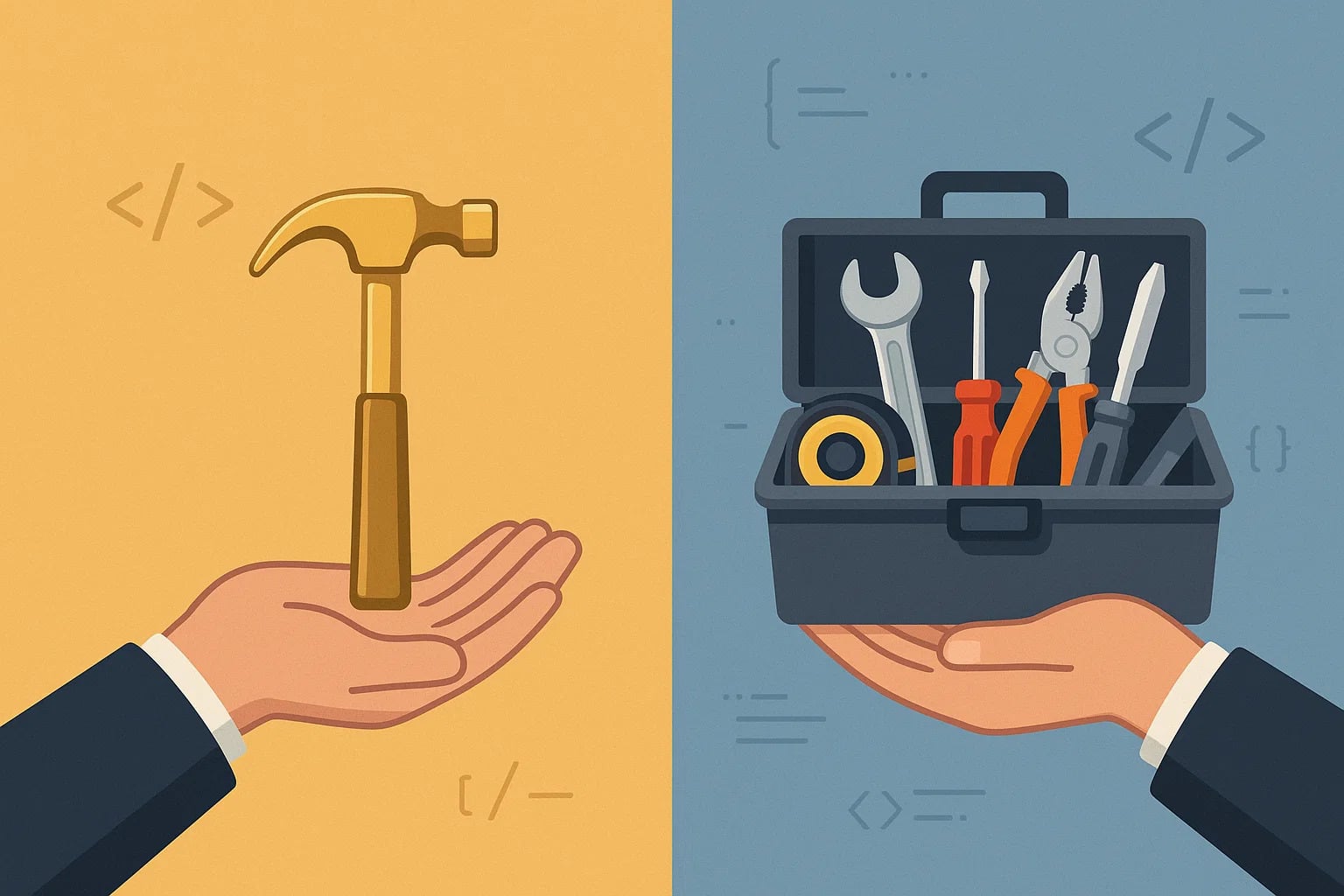
Picture this - there’s a carpenter in Pune who has a trusty hammer. He’s used it for 10 years.From fixing a wobbly charpai(Cot) to building a full kitchen cabinet, this hammer has been his go-to.
So when a neighbor asks him to tighten a loose screw on a cupboard, he still reaches for that same hammer.Does it work? Sometimes.Is it the right tool? Not really.
This is exactly what developers do.We find our “favorite hammer” - maybe React, AWS, or Python - and keep using it for every problem, even when a completely different tool would save time, money, and headaches.
What Is Developer Favoritism?
Developer favoritism is when we pick tools, languages, or methods because we’re comfortable with them - not because they’re the right fit.
It’s like always ordering butter chicken from the same dhaba because you know it’s safe… even when you’re in Amritsar and the makki di roti with sarson da saag is clearly the star.
8 Examples of Developer Favoritism 1. Picking Heavy Tools When Light Ones Would Do Better Like taking a fully loaded Tata truck just to carry two coconuts.
Real example: Using a massive 100KB image library when a 10KB one does the same job but loads 10x faster.
2. Using the Wrong Language for the Job
Imagine making chai(tea) for two people in a giant wedding-size aluminium dekchi. That’s what it’s like to write a small script in Java instead of Python - too much setup for a small job.
3. Always Choosing the Same Cloud Service
AWS is like the “Indian Railways” of cloud - everyone knows it, everyone uses it (48% of devs globally). But sometimes, Google Cloud or Azure might be cheaper and faster for your route. Yet teams keep booking the same AWS “ticket” out of habit - and end up overpaying.
4. Over-Engineering Simple Problems
It’s like calling the full Indian Army just to get rid of the stray animal blocking your colony gate.
Real example: Building a personal blog with a microservices architecture when a single-page static site would do.
5. Sticking to Old Workflows
Two-thirds of IntelliJ users spend over an hour manually refactoring - like peeling 10kg of peas by hand when there’s already a mixie to make the paste.
6. Only Working with People Who Think Like You
consulting only people from your team project is like a cricket team made entirely of right-handed batsmen - predictable, and you miss the magic of diversity. reach out to people from different projects
7. Using the Same Solution for Every Problem
Like putting extra chilli powder in every dish because “it works for me.” In coding, that’s rewriting code for every performance issue when sometimes adding caching (like adding ghee to mellow the spice) is the quicker fix.
8. Blindly Trusting Old Tools
81.5% of projects use outdated dependencies - like still using a Nokia 1100 for online banking because “it’s never failed me.”
Good Developer vs. Biased Developer
| Situation | Good Developer | Biased Developer |
|---|---|---|
| Choosing Tools | Tests multiple options, picks what’s best for this job. | Always uses the same library from the last project. |
| Updating Software | Regularly updates for security and performance. | “If it’s not broken, why touch it?” |
| Picking Cloud Services | Compares costs and performance across providers. | AWS forever, no questions asked. |
| Choosing Languages | Matches language to the problem. | “I’m a Java guy, I’ll do everything in Java.” |
| Daily Workflows | Automates repetitive tasks. | Does things manually like it’s 2008. |
Why This Matters (Reality Check)
When we cling to our favorites:
- Projects slow down - like waiting in a long IRCTC booking queue when flights are cheaper.
- Costs go up - wasting lakhs over the project’s lifetime.
- Users suffer - slow apps = frustrated customers.
- Innovation stalls - because we never try new “street food” flavors.
- Security risks grow - outdated tools = open gates for trouble.
How to Break the Habit
Before starting, ask:
Mujhe exactly kya karna hai? (Be specific) What’s my exact goal?
Iske do alag-alag tareeke kya hain? (Think alternatives)What are at least two different ways to achieve it?
Kaunsa option mere project ke liye best hai?Which one is better for the project/task?
Main yeh choice comfort ke liye kar raha hoon, ya performance ke liye?Am I choosing this because it’s better or because it’s familiar?
Pro tips:
- Always test two options before committing.
- Set clear comparison rules: speed, cost, maintainability.
- Spend 30 min/month learning new tools.
- Separate feelings from facts.
The Bottom Line
Being a great developer is like being a great cook you might love your masala dabba, but sometimes the recipe needs something fresh.
Your favorite tool is like your mother’s trusty pressure cooker brilliant, reliable, and close to your heart. But if you need to make dosa, you’ll still have to reach for the tawa.
The best developers know: it’s not about the tool you love - it’s about the right tool for the right job.
Share your thoughts - I'd love to hear about your own comfort zone moments and breakthrough discoveries.