
From Sci-Fi to Reality: Technologies That Sneaked Into Our Everyday Lives
A look at futuristic technologies that once belonged to science fiction but are now part of daily life.
I grew up watching movies where characters talked to computers, doors opened with just a glance, and machines wrote like humans. At the time, it all felt like pure science fiction cool to watch, but impossible to imagine in my daily life. Fast forward to today, and I catch myself casually saying, “Hey Siri, remind me to call mummy,” or watching Gmail finish my sentences before I even type them. Somewhere along the way, sci-fi stopped being futuristic and started being normal.
Think about voice assistants. A decade ago, talking to your phone in public would have looked ridiculous. Today, we don’t think twice about asking Alexa to play music or Google Assistant to turn off the lights. What once felt like Star Trek is now just Tuesday night.
Or predictive typing remember when typing an email meant writing every word yourself? Now Gmail and iMessage finish our thoughts like that one friend who always knows the punchline before you do. It’s subtle, but it saves millions of keystrokes every day. That’s technology sneaking into our lives without us even noticing.
And then there’s generative AI. A few years ago, the idea of a computer creating art, writing stories, or generating business plans sounded like something out of Blade Runner. Now? Students are using it for homework, marketers for campaigns, and developers for code snippets. Whether we like it or not, AI has moved from the big screen into our browser tabs.
The wild part is how quietly these shifts happen. We don’t wake up one morning and declare, “The future has arrived.” Instead, the future tiptoes in, one app update at a time. We normalize it faster than we realize. Yesterday’s “wow” becomes today’s “of course.”
But here’s the catch: when technology sneaks in this seamlessly, we often stop questioning it. Voice assistants listen. Predictive typing nudges how we communicate. Generative AI challenges what “original” even means. The tools we once saw as magic slowly reshape our habits, our work, and even our creativity.
It makes me wonder: what “sci-fi” tech are we currently dismissing that might be part of our daily lives in five years? Brain-computer interfaces? Fully immersive AR glasses? Holograms replacing Zoom calls? If history has taught us anything, it’s this what looks like fantasy today could be as ordinary as unlocking your phone with your face tomorrow.
And maybe that’s the fascinating (and slightly unnerving) part: technology doesn’t just change what we do, it changes how we think. When autocorrect fixes us, we rely a little less on memory. When ChatGPT drafts content, we rethink what creativity means. When algorithms recommend the “next best thing,” our choices are guided more than we’d like to admit. Slowly, sci-fi isn’t just in our hands it’s in our heads.
The line between “tool” and “partner” is blurring too. Ten years ago, tools were passive keyboards, screens, software. Today, they’re active participants in our workflows. They suggest, predict, and sometimes even decide. In a way, we’re not just using tech anymore we’re collaborating with it. That’s a very sci-fi thought in itself.
So next time you catch yourself rolling your eyes at some futuristic idea, pause. Remember how we once laughed at the thought of carrying supercomputers in our pockets or asking a speaker to play our favorite song. The future doesn’t crash in with fireworks it sneaks in quietly, until one day, you can’t imagine life without it.
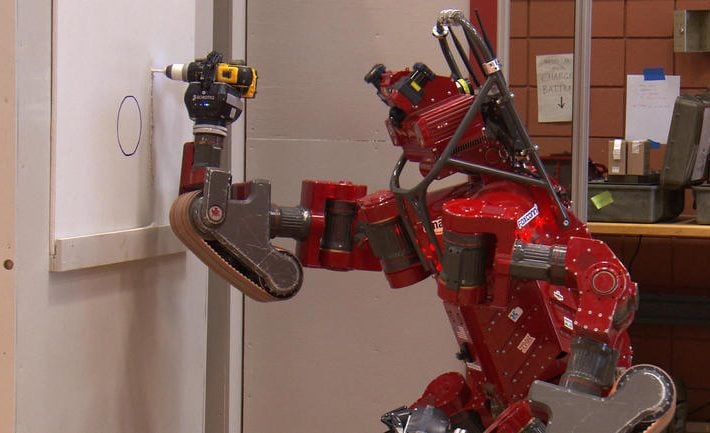
As Arthur C. Clarke famously said, “Any sufficiently advanced technology is indistinguishable from magic.” The only difference is that now, the magic shows up in our pockets, in our homes, and even in the way we type emails.Here is a reference: https://brightside.me/articles/the-future-is-here-sci-fi-technologies-that-became-everyday-innovations-825585/