
Data is the New Oil, But Are We Refining It Right?
Exploring how organizations collect vast amounts of data but often fail to extract meaningful value from it.
Not long ago, I heard it somewhere in presentation, “We’re collecting terabytes of data every week!” Heads nodded around the crowd as if they’d just struck gold. But when the follow-up question came “So, what are you doing with it?” the answers were confusing as if they have no idea what they are going to do with it. That’s the reality many organizations face: collecting data is one thing, turning it into something useful is another.
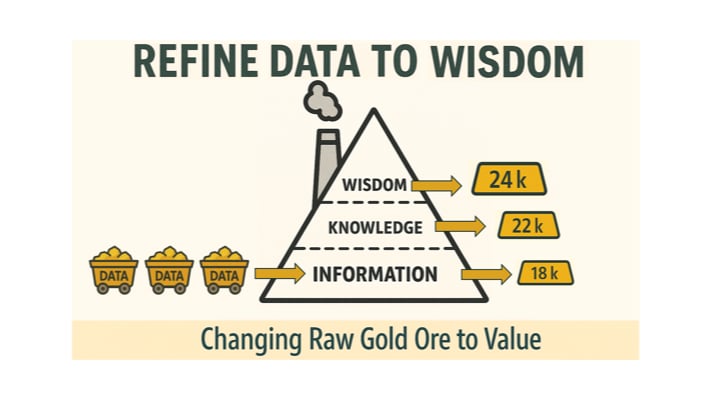
The phrase “data is the new oil” gets thrown around a lot. It sounds powerful, but the truth is raw oil isn’t valuable until it’s refined. The same goes for data. Storing massive amounts in data lakes or dashboards doesn’t automatically make it useful. Refinement means turning raw numbers into insights that drive smarter decisions. Without that, companies are just hoarding barrels of digital crude.
The irony is hard to miss. Organizations love to boast about the size of their data “We’ve got petabytes!” as though volume itself is a sign of success. But it’s a little like downloading hundreds of workout videos and never exercising. Having more doesn’t mean being fitter; it just means having more files.
And this is where the danger lies. Big data often turns into big noise. The result? Beautiful, colorful charts that impress in boardrooms but never actually guide real-world actions. Flashy presentations might draw a few approving nods, but unless the data points to something actionable, it’s just decoration. The companies that win aren’t the ones with the most data, but the ones with the sharpest insights.
The risks of poor refinement are real. Bad data practices lead to poor decisions, wasted budgets, and false confidence. It’s like driving a car with a foggy windshield you think the road is clear until you suddenly realize it’s not.
On the other hand, when organizations refine data properly, things change. Customer behavior becomes clearer. Market trends can be predicted. Products improve not because someone trusted a “gut feeling,” but because the numbers told a story worth acting on. That’s the power of refined data: it doesn’t just sit there, it drives outcomes.
What separates the best from the rest is not how much data they collect, but the questions they ask. When the questions are vague, the insights will be too. Garbage in, garbage out. The most effective organizations don’t chase “collect everything.” Instead, they start with: “What decisions do we need to make, and what data will help us make them?” That focus turns mountains of data into tools for clarity instead of clutter.
Ref:
There’s also a human side that often gets overlooked. Data might highlight where customers are dropping off, but it won’t tell the whole story. Without context without listening to real users it’s just numbers on a graph. The smartest companies pair data with empathy, recognizing that numbers and narratives together lead to real breakthroughs.
The future won’t belong to the organizations with the biggest servers, but to the ones that refine their data into clear, actionable insights and connect it with human understanding. Because in the end, raw oil doesn’t power cars. Refined fuel does. And raw data doesn’t transform businesses. Insights do.