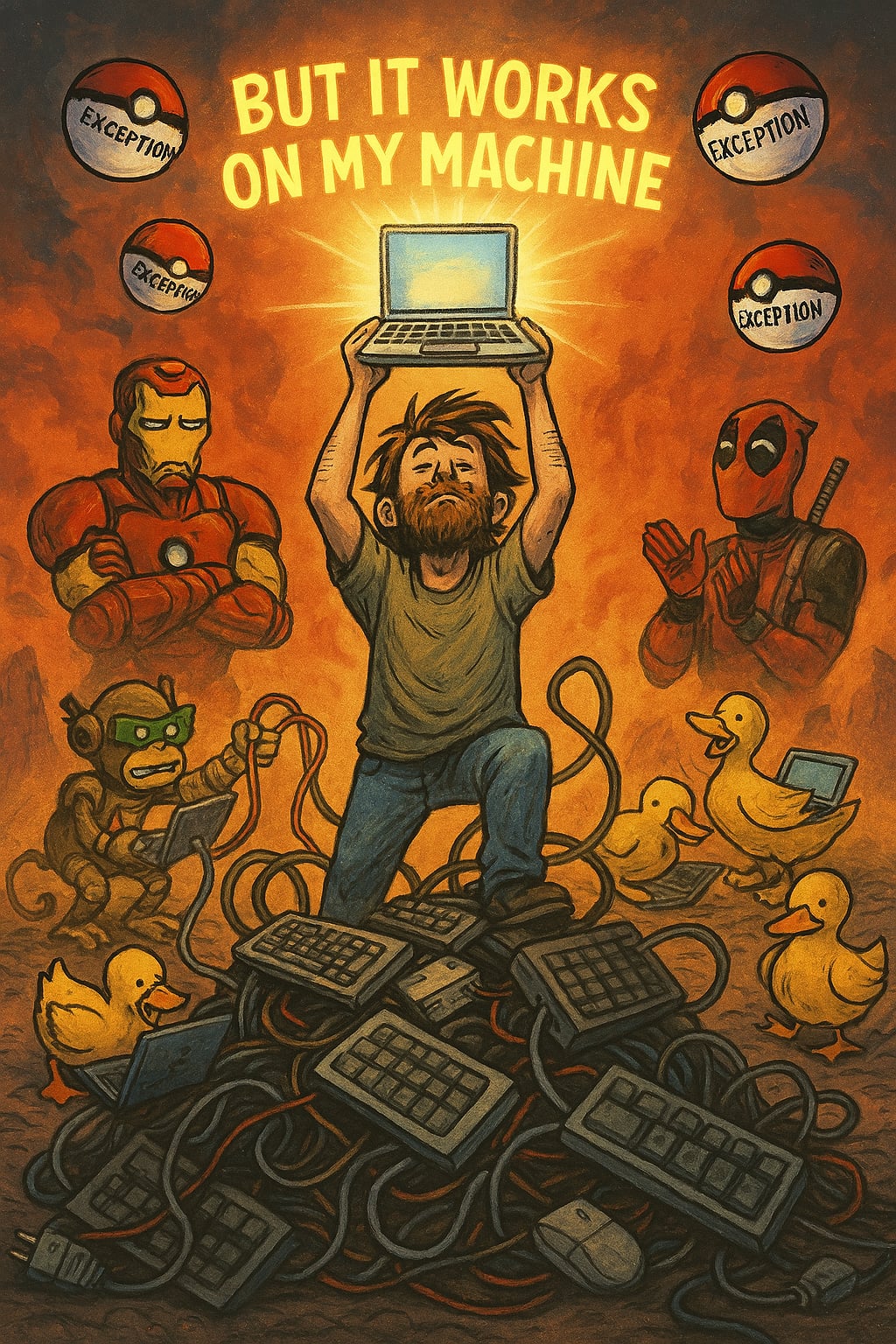
Absurd But Effective Techniques
Unconventional programming techniques that defy best practices yet somehow work reliably in production.
Absurd But Effective Techniques
Programming, in theory, is about precision, discipline, and structure. In practice, it is mostly about duct tape, caffeine, and the occasional ritual sacrifice of sanity. While official documentation might try to sell you "design patterns" and "best practices", real-world developers know the truth: some of the most absurd hacks not only exist but actually work. So, let us talk about those magical, horrifying techniques that somehow keep the digital world spinning.
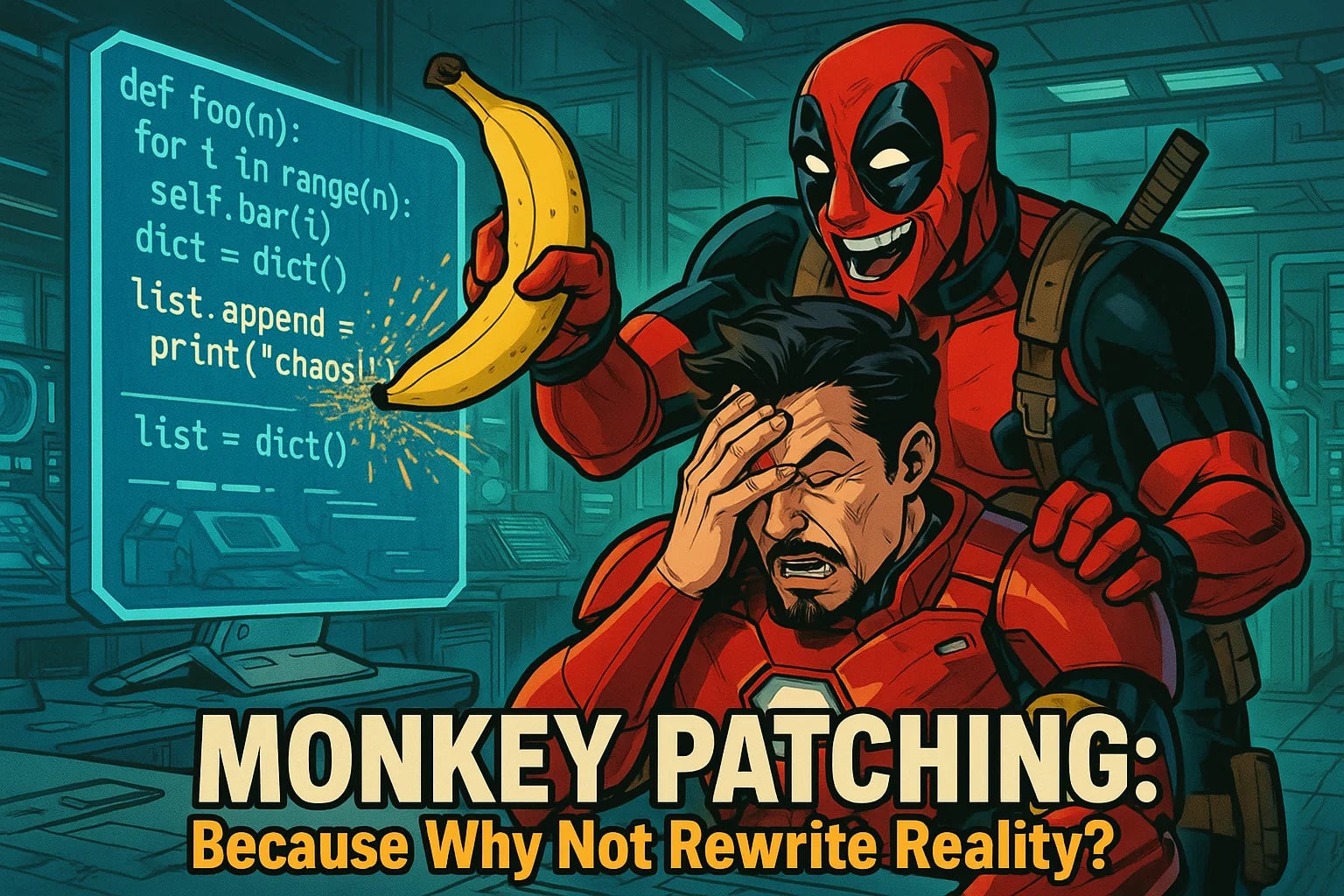
Monkey Patching: Because Why Not Rewrite Reality?
Monkey patching is like playing God but with fewer consequences (unless you count production outages). It is the noble art of dynamically modifying classes at runtime. In other words, you take a perfectly functioning piece of code that someone smarter than you wrote, and you decide, "No, I can make this better... right now, in the middle of execution."
Imagine the sheer power: want to make the list class in Python behave like a queue? Just patch it. Need String in Ruby to suddenly support time travel? Patch it. Of course, future developers will hate you, your manager will question your career choices, and your grandchildren might curse your name when debugging ancient code. But hey, it works in the moment, and nothing says "professional developer" like rewriting the laws of your programming language mid-flight.
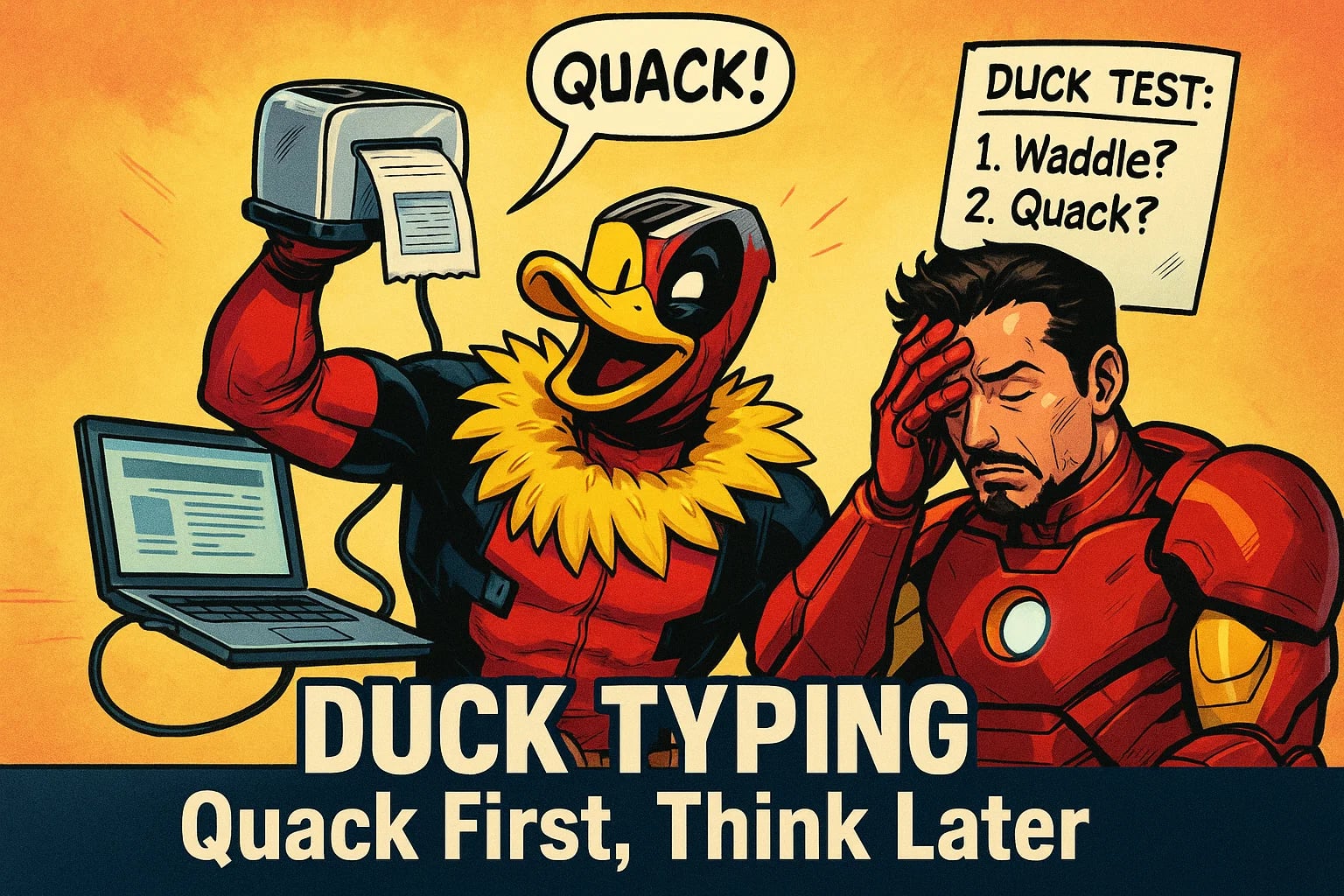
Duck Typing: Quack First, Think Later Duck typing embodies the wisdom of: "If it walks like a duck and quacks like a duck, then sure, it is a duck." Translation? Do not worry about types, just assume things will work until they do not. It is optimism-driven development at its finest.
The beauty here is that you can treat anything as anything else. Who cares if your "duck" is actually a toaster with web-scraping capabilities? As long as it has a .quack() method, it qualifies. The downside? Your code will eventually explode in a spectacular ball of AttributeError fire, but that is Future You's problem. Present You gets to bask in the glorious laziness of skipping type checks.
Pokémon Exception Handling: Gotta Catch Them All Ah, exception handling: the noble art of acknowledging that your code is fragile and reality is cruel. The proper way is to handle specific errors gracefully. But why waste time on that when you can Pokémon your way through? Just catch (Exception e) and call it a day.

It is beautiful in its simplicity. No matter what happens, whether it is a null pointer, out of memory, or your code spontaneously opening a wormhole, your program will smugly say, "I got this." Does it actually fix anything? Absolutely not. But at least your application will not crash. It will just sit there quietly doing absolutely nothing, which is basically the corporate definition of "stable software."
Undocumented Feature: The Polished Lie
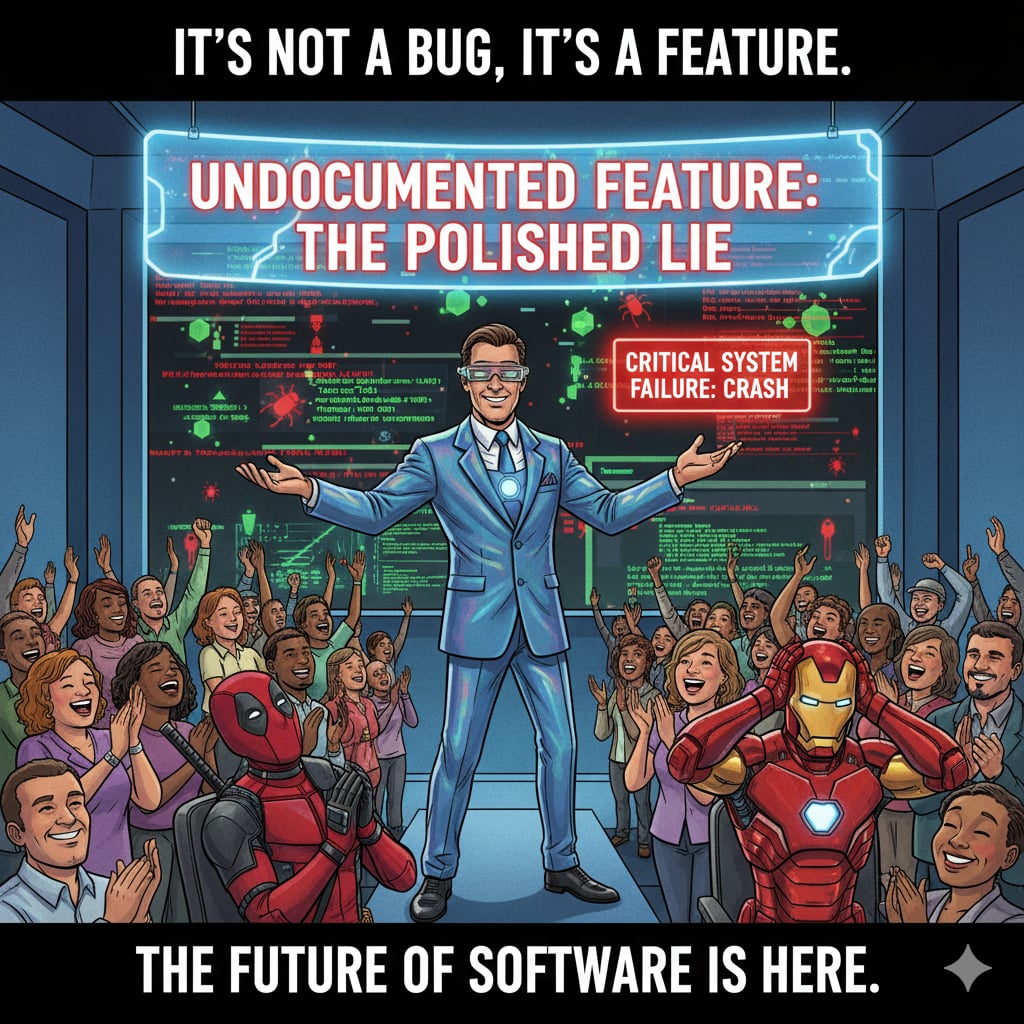
This one is pure marketing genius. When you accidentally release a bug but are too lazy or underfunded to fix it, simply rebrand it as an "undocumented feature." Suddenly, you are not incompetent, you are visionary. Think about it: every time your app mysteriously crashes when a user clicks the "Help" button, you do not call it a defect. You say, "Oh, that is an undocumented feature meant to encourage independent thinking." Your login system lets people bypass authentication if they press backspace three times? That is not a flaw, that is a hidden shortcut for "power users." Truly, there is no better way to turn failure into genius than with the phrase: It is not a bug, it is a feature.
Works on My Machine: The Holy Grail of Excuses
Finally, the cornerstone of developer theology: "Works on my machine." This is the ultimate mic-drop moment in debugging diplomacy. When QA finds a catastrophic issue, when staging burns down, or when production turns into digital rubble, this single phrase absolves you of all responsibility.
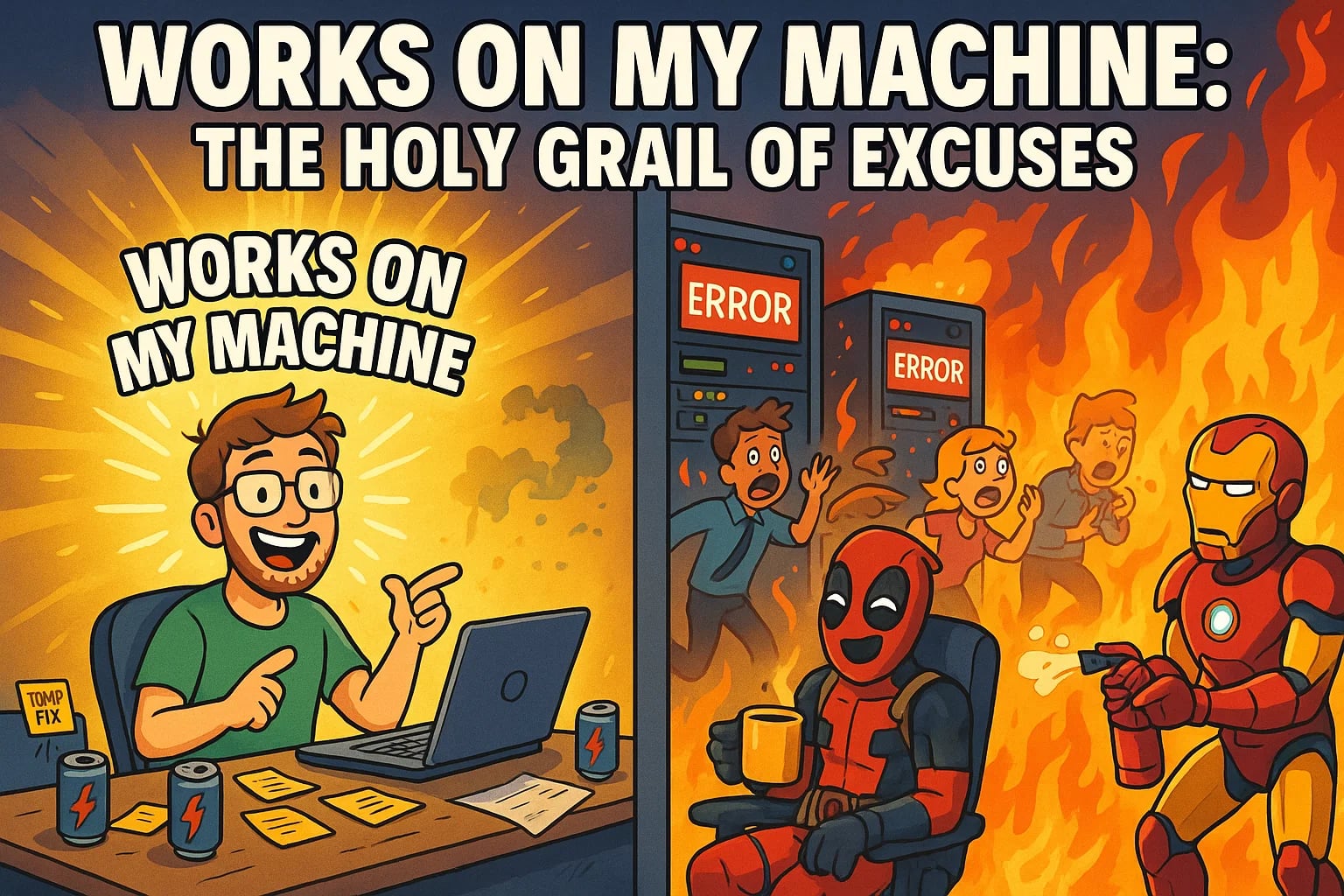
It is the universal get-out-of-jail-free card. After all, if it ran flawlessly on your laptop with its obscure OS version, weird local database, and twenty "temporary" environment variables, then clearly the problem lies with everyone else. It is not your code, it is the universe conspiring against you. And really, is that not the kind of bulletproof logic that makes software engineering such a noble profession?
Final Thoughts
The real world does not care about your clean abstractions and meticulously planned architectures. What keeps the industry alive are hacks, absurd, ugly, and occasionally brilliant techniques that we pretend to be ashamed of but secretly rely on every single day. Because when it comes down to it, software engineering is less about elegance and more about survival. And nothing screams survival quite like monkey patching your way into duck-typed exception chaos while muttering, "But it works on my machine."